
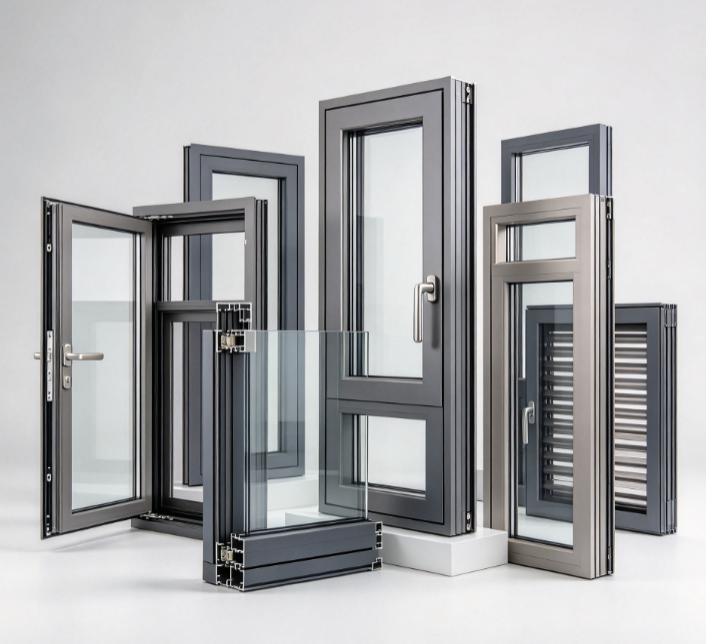
A custom aluminum window is part of a building envelope, so the right supplier must understand more than frame color. Profile material, opening type, glazing, hardware, drainage, dimensions, installation conditions, and delivery coordination all affect the finished result. This guide explains what buyers should confirm when evaluating a custom aluminum window manufacturer for residential, commercial, and industrial projects.
Contents
1. Define the opening and performance requirements, 2. Choose the right aluminum window configuration, 3. Review profiles glazing and hardware together, 4. Check manufacturing and installation control, 5. Prepare a useful RFQ, 6. Frequently asked questions
Define the Opening and Performance Requirements
Start with the opening, not a catalogue photo. Provide the rough opening or finished opening, wall build-up, sill condition, reveal depth, drainage direction, and the way the window will be installed. A window that looks correct in elevation may still be difficult to fit when the wall thickness, waterproofing layer, insulation, or interior trim is different from the assumed detail.
Then describe what the window must do. The project may prioritize daylight, ventilation, weather resistance, security, thermal comfort, acoustic control, ease of cleaning, or a combination of these. State the building location and exposure, including wind, rain, salt, dust, temperature, and frequency of use. A custom aluminum window manufacturer can recommend a practical system only when the operating environment and performance priorities are clear.
Project information | Why it matters | What to confirm |
Opening dimensions | Controls frame size, joint design, and installation tolerance. | Are dimensions finished, structural, or preliminary? |
Window operation | Casement, sliding, and louver systems have different clearances and hardware. | Which sashes must open, and how often? |
Glazing requirement | Glass thickness and build-up affect weight, fit, and performance. | Is single, laminated, insulated, or another glazing build-up required? |
Exposure and drainage | Rain, wind, and condensation influence seals, weeps, and sill details. | Where does water drain, and how is the opening protected? |
Finish and hardware | Color, coating, handles, locks, and screens affect appearance and use. | Are finish samples and hardware schedules available? |
Choose the Right Aluminum Window Configuration
Casement windows are commonly selected when the design needs an opening sash and direct ventilation. Sliding windows can be useful where the sash must move within the frame without projecting into a walkway or adjacent space. Louver windows support controlled airflow through angled blades, but the blade arrangement, cleaning access, and weather exposure need review. The correct choice depends on room function, opening size, access, ventilation, and the desired appearance.
XIAOZI’s public product information lists 6063-T5 aluminum casement, sliding, and louver windows, along with aluminum casement doors. The site says sizes, colors, glazing, and hardware can be customized to drawings and specifications. This is a useful starting point for a project brief, but buyers should still ask for the proposed section, operating hardware, glazing limits, and installation detail for each opening rather than treating all configurations as interchangeable.
Review Profiles Glazing and Hardware Together
The frame and glass work as one assembly. Confirm the profile series, visible sightline, reinforcement where needed, glazing bead or gasket arrangement, drainage path, and compatibility with the selected glass. A heavier glazing build-up can change sash weight and hardware loading. Large or frequently operated sashes may require a different hinge, handle, lock, or support arrangement from a small fixed or lightly used window.
Hardware should be reviewed for the way people will use the window. Confirm handle position, locking points, restrictors, screens, stays, emergency access, and replacement availability. For a coastal or high-humidity location, ask how exposed hardware and fasteners are protected. For projects with many window types, create a schedule that links each opening number to its size, operation, glass, finish, hardware, and accessories. This prevents a correct frame from being paired with the wrong glass or handle.
Check Manufacturing and Installation Control
A custom window supplier should show how drawings are reviewed, revisions are controlled, materials are checked, profiles are cut and assembled, glazing is installed, and finished units are inspected. Useful checks include dimensions, diagonals, sash operation, hardware function, surface finish, gasket continuity, drainage openings, and packaging protection. The inspection scope should be agreed before production, especially when the windows are part of a large project with repeated openings.
XIAOZI describes a one-stop process from inquiry and consultation through design and quotation, custom production, delivery, and installation. Its public site identifies a 12,000 m² production base and says R&D, production, sales, and installation are handled in-house. Buyers should use this information to ask who owns each approval step, who checks site dimensions, how installation tolerances are handled, and how defects or missing accessories are recorded and corrected.
Prepare a Useful RFQ
A complete RFQ should include plans or elevations, opening schedule, wall sections, dimensions, window type, operating direction, glazing, finish, hardware, screens, expected quantity, site conditions, packing requirements, delivery location, and installation scope. Mark any openings that are safety-critical, difficult to access, exposed to weather, or connected to special waterproofing details. Photographs and a marked-up drawing can resolve questions that a product name cannot.
Compare quotations on the same scope. Confirm whether the price includes survey, shop drawings, samples, glazing, hardware, packaging, shipping, site installation, and after-sales support. Ask which dimensions are assumed and which must be verified before production. A transparent quote is easier to approve and reduces the risk of expensive changes after profiles have been cut.
Frequently Asked Questions
What should I send to a custom aluminum window manufacturer?
Send the opening schedule, drawings, wall sections, dimensions, operation type, glazing requirement, finish, hardware, quantity, site conditions, delivery location, and installation expectations. Identify any critical waterproofing or safety requirements.
Are casement, sliding, and louver windows interchangeable?
No. They differ in ventilation, clearances, hardware, cleaning, drainage, and weather exposure. Select the opening type from the room function and project detail.
Should installation be included in the quotation?
It depends on the project, but the scope should be explicit. Confirm who measures openings, approves shop drawings, installs units, seals interfaces, and handles adjustments or defects.
Summary
Choosing a custom aluminum window manufacturer begins with the building opening and its real performance requirements. Review the window type, profile, glazing, hardware, drainage, finish, inspection, and installation scope as one system. A complete RFQ and controlled drawing-approval process give the project a more reliable path from first dimensions to finished installation.
SEO Metadata
Meta Title: Custom Aluminum Window Manufacturer Guide
Meta Description: Learn how to choose a custom aluminum window manufacturer by reviewing opening requirements, window types, glazing, hardware, quality control, and installation scope.
Keywords: custom aluminum window manufacturer, 6063-T5 aluminum windows, custom casement window supplier, sliding aluminum window manufacturer, aluminum louver window supplier, made to measure aluminum windows, custom aluminum doors and windows, aluminum window glazing and hardware